Winter Pool Care: Spend a Little Now, Save Thousands by Spring
A short weekly routine through the cold months, or a murky green pool and a hefty clean-up bill when summer comes back. Here is the low-effort plan our branches recommend.
An empty pool deck in June doesn’t mean your pool has gone to sleep. The water is still alive with whatever blows, drips and grows into it, and if you walk away for the season it slowly becomes one of the priciest problems on your property.
Left alone, the chemistry wanders off balance, leaves rot on the floor, algae finds a foothold, and the pump and fittings sit still for so long that rubber seals dry out and moving parts stick.
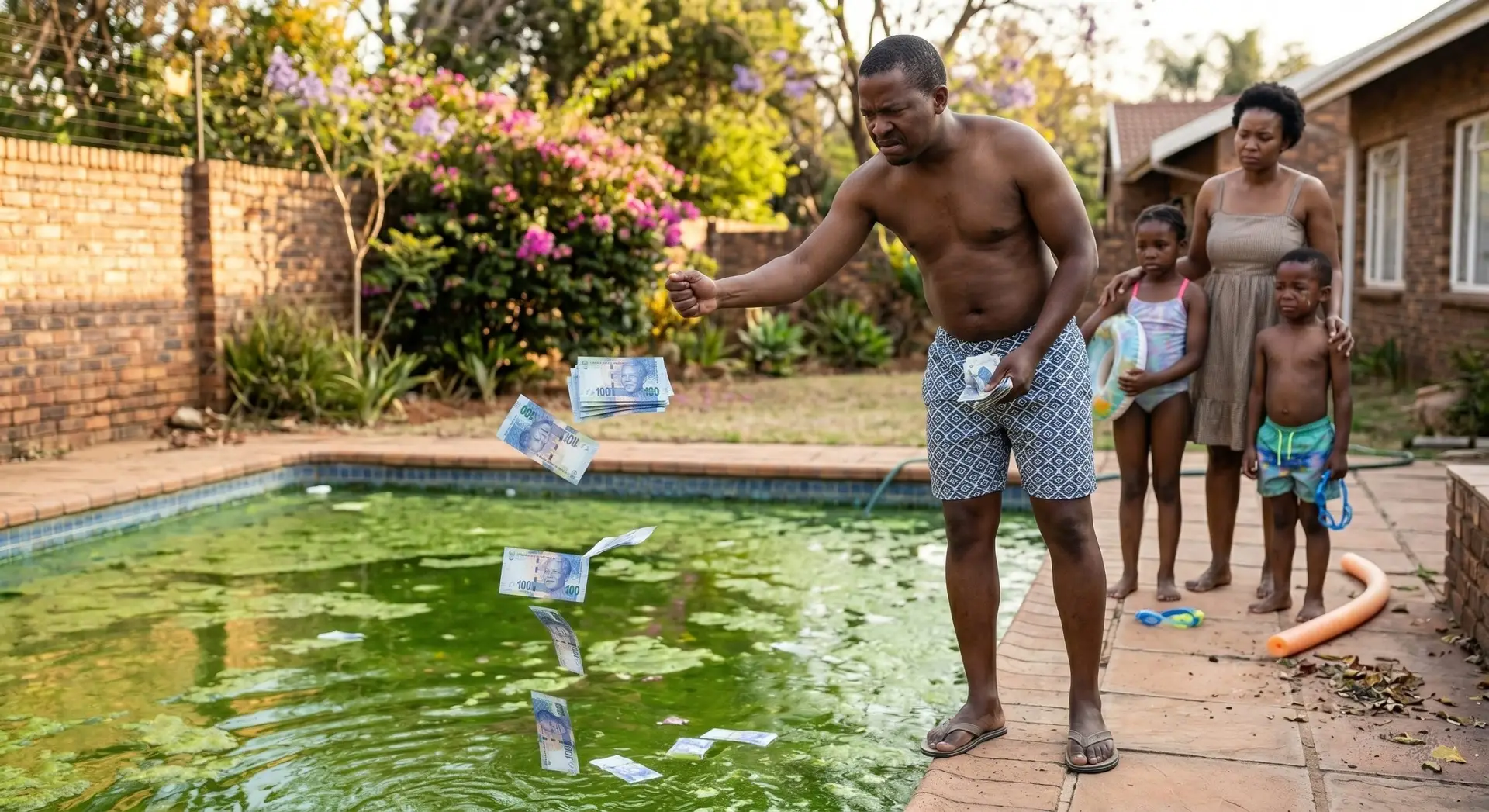
Fast-forward to September and the bill arrives: repeated shock doses, days of non-stop filtration, a full rebalance and, in bad cases, draining and refilling the whole pool. Between chemicals, water, electricity and a call-out, that clean-up easily lands at around R2,500–R4,000.
Compare that with roughly R150–R250 a month for lighter chemical dosing and a single hour of pump time per day. That small effort means your pool is swim-ready on the very first hot weekend.
Neglect vs Routine: The Numbers Side by Side
Let’s compare two owners over a typical five-month off-season, April through September. One switches everything off; the other keeps a basic routine ticking over.
Owner A: switches off and walks away
By spring, a pool left to go green usually needs several rounds of shock, an algaecide, a clarifier and a pH correction, plus a top-up or even a complete refill if the water is too far gone. In Gauteng, paying a professional to rescue a green pool starts at about R1,200 and can climb to R4,000 for the worst cases. You’ll also be filtering 12–24 hours a day for several days straight, which costs 4–5 times what your pump normally uses in a day.
Factor in what can break while the equipment stands idle (a shaft seal replacement alone runs at roughly R400–R1,200 with labour) and a realistic spring recovery total is R2,500–R4,000, sometimes more.
Owner B: keeps a light winter routine
Cutting pump time to 1 hour a day for winter (from 3–4 hours in summer) costs about R80–R110 a month in power, assuming a standard 1.1kW pump and Eskom tariffs of roughly R2.50–R3.30/kWh depending on your municipality. A chlorine dose every two weeks and the odd pH tweak adds around R80–R120 a month in chemicals.
Winter upkeep vs the spring clean-up
Approximate figures for a standard 1.1kW pump at current Gauteng electricity tariffs and typical recovery rates. Pool size, your municipality and the state of the water will all change the numbers.
Put R800–R1,150 for the whole season next to a R2,500–R4,000+ spring rescue and the decision makes itself.
Beyond the money, Owner B also skips the hours of scrubbing and the frustration of a swamp in the garden just as the weather turns.
Keep the Pump Turning, Even in Winter
The most common winter mistake we hear about at the counter is simple: the pump gets switched off in April and nobody touches it again until September. That’s five months of a still motor, drying seals and water that never moves.
How a dry shaft seal kills a motor
Between the wet end of the pump (where the water flows) and the motor sits a mechanical shaft seal. It depends on a fine film of water for lubrication. Stop the pump for long enough and that film disappears, so the seal dries, cracks, warps and finally gives way. Once it fails, water seeps into the motor and wrecks it. Even a few seconds of running dry can leave heat cracks or blisters on the seal face, so imagine what five months does.
It’s estimated that around 75% of pumps that die early are killed by water getting into the motor through a failed shaft seal. Replacing the whole pump costs roughly R2,500–R8,000 depending on the model, while a new shaft seal is about R160–R400 for the part before labour. Either way, it’s spending you could have avoided.
Still water is a problem in itself
Water that doesn’t circulate becomes a nursery for bacteria, algae and mosquito larvae. Chemicals can’t spread through a pool that isn’t moving, so dead zones develop, usually in corners and around the steps, where algae spores settle and multiply. Once algae has grabbed hold of the walls and floor, getting rid of it takes far more time and money than simply stopping it from starting.
The fix
Drop your pump timer to 1 hour a day for the winter months. That’s enough to move the water, spread your chemicals and keep the mechanical parts lubricated. Programme it for off-peak hours and you’ll save a little more. Running a variable-speed pump? Turn the RPM down and it keeps the water circulating on a fraction of the power.
Your Water Chemistry Doesn’t Take a Holiday
No swimmers doesn’t mean no chemistry. Winter brings its own complications, and on the Highveld they can be significant.
Highveld dust and dry wind
Gauteng and Pretoria winters are dry and windy. Fine dust lands on the surface, sinks, and raises the total dissolved solids (TDS) in the water. Because that dust is alkaline, it also pushes pH up. Wind-blown leaves and other organic matter break down on the floor, eating up chlorine and feeding algae spores. If you’re not skimming and circulating, that debris piles up quickly.
Other regions have their own winter quirks. The Western Cape gets most of its rain in winter, so expect more leaf litter and runoff in the pool. On the KZN coast and in Mauritius the milder weather means algae doesn’t really slow down, so the routine matters just as much there.
Why pH creeps upward
With weaker UV and no bathers you’d expect stable water in winter, but pH tends to climb through the dry months. Dust is one reason. Less acid rain is another (in summer it naturally nudges pH down). The third is concrete or marbelite surfaces slowly leaching calcium into water that isn’t moving.
Once pH goes past 7.8, chlorine loses much of its punch. At a pH of 8.0, only about 20% of your free chlorine is actually sanitising, even when the test kit says your chlorine level is fine. That’s how a pool can go green while the chlorine reading looks perfectly healthy.
Total alkalinity: pH’s shock absorber
Total alkalinity buffers the water against sudden pH swings. Aim to keep it between 80 and 120 ppm. Too low and pH jumps around unpredictably; too high and the water clouds up while scale builds on the plaster and equipment. Checking it every two weeks in winter and making small corrections costs far less than repairing scale or etching damage in spring.
Calcium hardness, the forgotten reading
Most owners never think about calcium, but your water does. If it drops below 200 ppm, the water pulls calcium out of the marbelite or plaster, leaving the surface etched and rough. Above 400 ppm, scale forms on the surfaces and inside your filter and pipework. Slower water movement in winter, combined with a higher ratio of evaporation to top-ups, can let calcium drift upward, so test it every month or two.
The fix
Test every two weeks through winter. pH and chlorine are the bare minimum, and alkalinity is worth adding. An Aqua Max Dual Test Kit gives you pH and chlorine results in under a minute, and a spare pack of DPD refill tablets means you won’t run dry halfway through the season. Ask your nearest branch for trade pricing.
Add chlorine weekly, at a lower dose than in summer. The easiest winter approach is a floating dispenser such as the Aqua Max Floating Pill Dispenser loaded with stabilised chlorine tablets. It releases a slow, steady trickle of chlorine so you don’t have to remember.
The 20-Minute-a-Week Winter Checklist
None of this takes long. Roughly 20 minutes a week covers it.
Every week- Pump on for an hour a daySet the timer once and leave it.
- Skim and empty the weir basketGet leaves and debris out before they rot and use up your chlorine.
- Check the chlorineTop it up if needed, or let the floating dispenser handle it.
- Test and adjustCheck pH and chlorine with your test kit and correct as required.
- Brush walls and floorStops algae settling on surfaces, particularly in shady spots and corners.
- Look for pump leaksWatch for any moisture around the seal plate.
- Backwash the filterKeeps flow and filtration working properly.
- Check the water levelEvaporation is lower than in summer, but dry wind still pulls the level down. Too low and the pump can lose prime and run dry.
- Inspect the cleaner hosesLook for cracks or bite marks. Pets and other animals chewing through hoses is a frequent cause of prime loss.
- Full water analysisHave pH, chlorine, alkalinity, calcium hardness and stabiliser (CYA) tested. Many pool shops do this free of charge. You get the full picture and can correct any drift before it turns into a bigger job.
Give Your Equipment a Winter Service
With nobody swimming, the off-season is the best time to inspect, service and replace parts without inconveniencing anyone.
- PumpA daily run keeps the seals wet and the bearings moving. Grinding or squealing points to worn bearings, and drips underneath mean the shaft seal is on its way out. A leaking seal caught early is an inexpensive repair; leave it and you’re replacing a motor.
- FilterBackwash once a month. If the sand in your filter is older than 2–3 years, swap it out this winter. Tired, channelled sand filters poorly, so the pump has to run longer for worse water. (Considering an upgrade? See our filter glass vs sand guide.)
- Pool cleanerIf you’re not running it regularly, take it out for the season. Months in the water without use can leave hoses stiff, warped or cracked. Keep them somewhere cool and shaded, not coiled up in direct sun.
- Valves and O-ringsInspect the multiport valve, union fittings and the pump lid O-ring. Dry winter air makes rubber perish. A pump lid O-ring costs about R12–R40, but a pump that loses prime through a cracked one can cost you a shaft seal or, worse, the motor.
Solar Heating: Don’t Shut It Down
Got solar pool heating? Resist the urge to turn it off until summer. The UV-stabilised panel material is designed to have water running through it, and months of sitting dry, combined with winter sun and big day-night temperature swings, breaks it down faster than normal use ever would. The panels can turn brittle.
Run the solar system for a short cycle a few times a week through winter, even if you have no intention of heating the water. It keeps the panels conditioned and stops the internal channels drying out and becoming fragile.
Essential
Fit a vacuum breaker before the frost
On a winter night, water must never stay in the solar panels. Highveld nights regularly dip below zero, and water that freezes inside a panel expands and splits the internal channels. That damage can’t be repaired; the panels have to be replaced.
A vacuum breaker, also known as a vacuum relief valve, lets the panels drain themselves when the pump turns off. Without it, water is trapped up on the roof with nowhere to go. When the pump stops, the valve opens, breaks the siphon and gravity carries the water back down into the pool.
No vacuum breaker on your system yet? Have one installed before the cold sets in. It’s a small, low-cost fitting protecting panels worth thousands of rands.
Shop solar panel fittings onlineThinking ahead to spring heating? Our solar pool cover guide is worth a read too.
Use the Quiet Months for Upgrades
Autumn and winter are the natural window to resurface, repaint or upgrade. The pool is out of use, contractors have more availability, and any new finish gets months to cure properly before swimming season.
Off-season project
Planning a makeover?
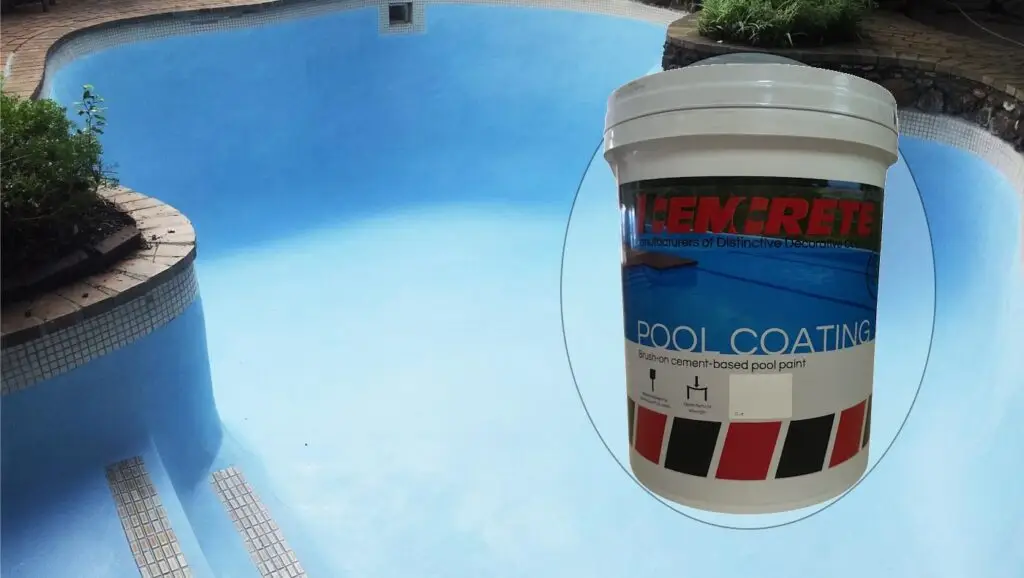
Our full guide covers painting a pool in winter with Cemcrete Pool Coating: the right timing, how to prepare the surface, and why the season makes a difference.
Read the pool painting guideA new coat of pool paint, fresh waterline mosaics or a pump upgrade: get it done now and you won’t give up a single summer swimming day.
Winter Pool Care: Your Questions Answered
How long should my pump run each day in winter?
For most average-sized home pools, 1 hour a day does the job. It keeps water moving, spreads chemicals and stops the mechanical seal drying out. Schedule it for off-peak hours to keep electricity costs down.
Is it OK to switch the pump off for the whole winter?
No. Over a long shutdown the shaft seal dries and cracks, letting water into the motor. With no circulation at all, the water stagnates and algae and bacteria take over. Just 1 hour a day prevents both problems.
What does a green pool clean-up cost in South Africa?
A professional green pool recovery in Gauteng usually costs R1,200–R4,000, depending on how bad it is. Doing it yourself, budget about R400–R1,200 for shock, algaecide, clarifier and acid, on top of a much bigger electricity bill from running the pump 12–24 hours a day for several days.
How often should I test the water in winter?
Every two weeks at the very least, checking pH and free chlorine. Ideally test alkalinity monthly, and have a full analysis (calcium hardness and CYA included) done at least once over winter.
Which chemicals do I need over winter?
The essentials are granular or stabilised chlorine to hold your sanitiser level, and pool acid (hydrochloric acid) to bring pH back down if it goes over 7.6. For the least effort, use a chlorine floater with stabilised tablets.
Can dust really change my pool chemistry?
It can. Fine dust, Highveld dust in particular, is alkaline and lifts pH as it settles. Together with rotting leaves and other organic matter, it raises total dissolved solids and puts extra demand on your chlorine. Skim regularly and test every two weeks to stay on top of it.
Does a pool cover help in winter?
Very much so. A good cover keeps debris out, cuts evaporation, holds in heat and noticeably lowers chemical use, and it means less cleaning for you.
Should solar panels keep running in winter?
Yes. Panels left idle for months can turn brittle and wear out sooner, so cycle them regularly through winter. Most importantly, make sure a vacuum breaker is fitted so the panels drain when the pump stops. Water left in them overnight can freeze and crack them beyond repair.
Stock Up for Winter at Your Nearest Pool Trade Branch
Chlorine, pH correction, test kits and spares for your pump, filter and solar system, all at trade pricing with same-day supply. Trade and public welcome at 14 branches across South Africa, Namibia and Mauritius. Call or WhatsApp 066 503 7475 or visit pooltrade.co.za.
Find your nearest branch WhatsApp us Shop chemicals & testing online