Painting Your Pool: The Complete Cold-Season Guide
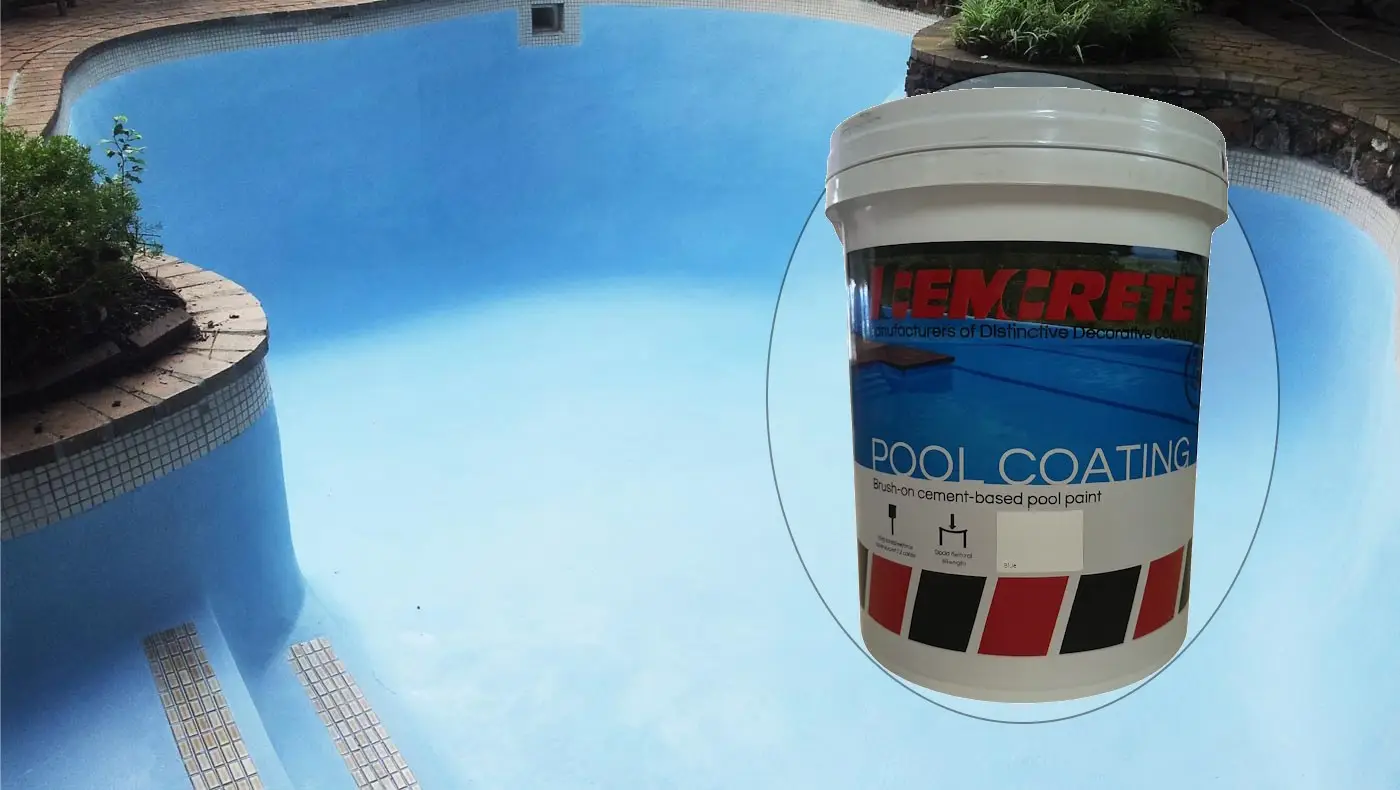
Rough, blotchy marbelite doesn’t automatically mean paying for a new plaster job. A cement-based coating like Cemcrete Pool Coating can bring the old surface back to life at a much lower cost — and the quiet winter months give you the ideal window to get it done.
Every marbelite finish wears out eventually. Years of pool chemicals, harsh sun and everyday use leave the plaster feeling coarse underfoot, covered in stains and faded in colour. At that point most pool owners face a choice: pay thousands for a complete re-plaster, or roll up their sleeves and coat the existing surface with a cement-based pool paint that restores it for a fraction of that price.
In this guide our Pool Trade team walks you through the whole job with Cemcrete Pool Coating: prepping and acid washing the shell, mixing and brushing on the coating, curing it properly and refilling without problems. Along the way we explain why the colder months are the smart time to take it on.
Winter: The Best Season to Paint a Pool
Plan on having no water in your pool for a minimum of 8 days. Roughly 2 days go into prepping and painting, and the coating then needs a compulsory 6 days of air curing before a drop of water goes back in. Do that in December and you lose your pool at the very time everyone wants to swim. Do it in June and you’re giving up nothing — nobody is swimming anyway.
The weather works in your favour as well. Cemcrete Pool Coating shouldn’t go on if rain is forecast within 4 hours of application, and if it rains during the 6-day cure you have to get that water out of the pool straight away and add one more curing day for every day it rained. That’s why the dry winters in Gauteng, Pretoria, the Free State, North West and Limpopo are so useful: they give you the longest unbroken run of dry days for curing.
Painting in the Western Cape? Winter is the rainy season down at our Stikland, Somerset West and Bergvliet branches, so keep a close eye on the forecast and pick a reliably dry spell — the same 4-hour rule and extra-day curing rule apply.
Lower temperatures are a bonus too. When it’s hot, Cemcrete advises painting only in the early morning and late afternoon so the coating doesn’t dry out too fast. Mild winter days mean you can keep working right through the day in comfort.
Our advice: plan ahead and book your paint job for May, June or July. When swimming weather comes back around in September, you’ll have a pool that looks like new.
Understanding Cemcrete Pool Coating
Cemcrete Pool Coating is a two-component, cement-based paint made specifically for bringing tired, pitted and stained marbelite pools back to life. Ordinary pool paints form a film on top of the plaster; Pool Coating works differently, soaking into the pores of the existing plaster and forming a chemical bond with it. The result is a sealed, hard-wearing finish that stands up to algae and staining.
You mix it up and brush it on with an ordinary roof paint brush. It cures rock hard and holds up permanently under water — but bear in mind it’s designed as a single, once-off treatment, not something you top up every few years.
Cemcrete Pool Coating: the essentials
- Supplied as a 15kg twin-pack (one powder, one liquid)
- Each pack does roughly 25m² at two coats
- A typical 4.5m × 9m pool usually takes 3 packs
- Seven colour options, including Abbotsford Green, Blue, Charcoal, Sandstone, Turquoise and White
- Expected life: 3–4 years if the pool is well maintained, and as long as 7–8 years in some cases
Check This Before You Buy
You only apply Pool Coating once
There’s no painting over it down the line. The first application soaks into the plaster and closes off its pores, so any later coat has nothing to grip and will lift off in time. Because there’s no do-over, careful preparation and proper application are everything.
- Older marble-plastered (marbelite) pools that have never had any paint on them
- Plaster that is at least 9 months old and fully cured
- Fibreglass pools
- Pools that have been painted before, with any type of paint
- Fresh cement or newly plastered pools
- Surfaces finished in oil-based or plastic paint
Prepping the Shell: Draining, Acid Washing and Repairs
Preparation decides whether your coating lasts. Bad prep is the single biggest cause of pool coating failures, so give this stage the time it needs.
-
Empty the pool all the way
Run the pool pump on the waste setting to get rid of most of the water, then finish off the last bit at the bottom with a submersible pump or a siphon.
-
Deal with any algae
Where algae is growing on the plaster, mix 4 cups of granular chlorine (HTH) into a 10-litre bucket of water. Brush the solution onto the affected patches with a block brush, give it 15–20 minutes to act, then scrub well and rinse off.
-
Acid wash the plaster
Get this right and the rest follows. Acid washing strips away calcium build-up, stains and the thin, worn-out skin on top of the plaster, leaving a clean, open-pored surface for the coating to soak into.
Using a plastic bucket (never a metal one), combine 1 part hydrochloric acid with 2 parts water. Always pour acid into water — never water into acid. Put on protective gloves and eye protection. Working section by section from the walls at the shallow end, apply the mix generously with a block brush or a stiff nylon-bristle brush.
While the acid is still working, scrub hard with a wire brush. The aim is to physically roughen the plaster so the coating has something to key into — when you’re finished it should feel like medium-grit sandpaper. Rinse very thoroughly with clean water. If you’re not sure it’s done properly, acid wash a second time. Don’t take shortcuts here.
-
Fix cracks and holes
Once the surface is clean, look it over for cracks and holes and fill them with Cemcrete Underwater Pool Patching (1kg or 5kg). Although it can be used underwater, for a full repaint you’ll get the best result applying it to the dry shell and letting it cure before you coat.
-
Clean up and mask off
Vacuum or sweep out all dust and loose debris. Take out mosaic fittings and light housings and tape over them. Before any paint goes on, the shell must be spotless, free of anything loose, and damp.
Mixing and Brushing On the Coating
Getting the mix right
Each twin-pack comes in a drum holding a bag of powder and a bottle of liquid. Start by pouring in the liquid, then add the powder gradually while you stir with a flat paddle or a mechanical mixer, until you have a smooth, creamy, brushable mix. If it’s too thick, add a little clean water at a time — just don’t make it too runny.
Whatever you mix has to be used within 1 hour, and leftover mixed material can’t be kept. If you expect the job to run longer, divide the pack and mix in smaller batches.
Painting technique
Wet the pool surface first so it’s damp but not shiny with puddled water — a fine mist from a spray nozzle does the job nicely.
Lay on two generous coats with a big roof paint brush, using even strokes and finishing off with the tip of the brush to keep brush marks to a minimum. Keep your strokes going the same way: up and down on the walls, one direction only on the floor. Begin in the deep end and work back toward the shallow end, and let the first coat firm up before you go over it with the second.
Curing, Refilling and Early Water Care
Six days of air curing
Once you’ve finished painting, the coating needs a full 6 days to air cure before any water goes in. While it cures:
- Get rainwater out of the pool straight away, and add one extra curing day for every day it rains
- On day one, mist the coating with a fine spray every hour so it doesn’t dry too fast and crack — especially important on warm or windy days
- Stop leaves, soil and mud from landing on the new surface, as they can leave stains
Refilling
When the 6 days are up, start filling from the deep end and keep the water running until the pool is full. Stopping and starting can leave a visible waterline mark on the new coating.
Balancing the water afterwards
A newly applied cement-based coating pushes your pH up — left untreated, the water’s pH will climb and settle at around 11. For the first few weeks, look after it carefully:
- Use only small doses of unstabilised granular or liquid chlorine
- Keep away from copper sulphate-based products — they react with the new coating and leave permanent stains
- Test and correct the pH often
- Leave your automatic pool cleaner out for 21 days and brush by hand in the meantime
Worried about porous plaster or fine hairline cracks after the job? An extra protective layer of Cemcrete Pool Sealer 5L is worth considering.
Your Pool Painting Checklist
Prep supplies- Hydrochloric acid (pool acid)
- Granular chlorine / HTH, if you need to treat algae
- Wire brush and block brush
- Paint scraper
- Cemcrete Pool Coating 15kg — Blue, Charcoal or White
- Cemcrete Underwater Pool Patching 1kg or 5kg, for filling cracks
- Big roof paint brush (a lambswool roller also works for the second coat)
- Masking tape
- Plastic buckets — no metal
- Protective gloves and eye protection
Cemcrete’s step-by-step application video
Cemcrete has put together a video that runs through the entire Pool Coating job, from prepping the surface to brushing on the last coat. It takes about three minutes and is well worth watching to see the right mix consistency and brush technique before you start.
▶ Watch on YouTubePool Painting FAQs
When is the best time of year to paint a pool in South Africa?
May to July. You’re not using the pool, the dry weather in most inland regions lets the coating cure without interruption, and the cooler days stop it drying too fast while you paint. In winter-rainfall areas like Cape Town, choose a dry stretch of weather.
Will Cemcrete Pool Coating work on a fibreglass pool?
No. It’s made only for older marble-plastered (marbelite) pools that have never been painted. Fibreglass, vinyl and previously painted surfaces aren’t compatible.
How many packs of Cemcrete Pool Coating will I need?
Each 15kg twin-pack covers roughly 25m² at two coats, and an average home pool of 4.5m × 9m takes about 3 packs. Work out the total surface area of your pool — floor and walls — to get your number.
How long will the coating last?
Expect around 3 to 4 years with good maintenance and well-balanced water. With ideal conditions and careful chemical management, it can go 7 to 8 years.
Can I put a fresh coat of Pool Coating over the old one later?
No. It’s a single application: the first coat soaks in and seals the pores of the plaster, leaving nothing for a second coat to bond to, so it will peel over time. That’s why it pays to prep and apply correctly the first time.
How soon after painting can I fill the pool?
Allow 6 days of air curing before you start filling. For each day it rains during that time, add one more day.
When can my automatic pool cleaner go back in?
Give it 21 days from when the pool is filled. Until then, stick to a manual brush and a hand-held vacuum.
Which colours can I choose from?
There are 7 colours, including Blue, Charcoal, White, Turquoise, Sandstone and Abbotsford Green. You can see the full range online, or ask at your nearest Pool Trade branch.
Ready for a Fresh Finish by Spring?
Painting your own pool is a very achievable weekend-plus project as long as you respect the rules: check that your surface is suitable, put real effort into the acid wash, apply two even coats, give it the full 6-day cure and look after your pH once it’s filled. Start now, while the pool is idle and the weather is dry, and you’ll beat the September rush with a pool that looks brand new.
Get Your Pool Paint at Pool Trade
Pick up Cemcrete Pool Coating, Pool Sealer and Underwater Pool Patching at any of our 14 branches across South Africa, Namibia and Mauritius. Trade and public welcome — walk in for trade pricing and same-day supply.
Prefer to call? Ring 066 503 7475 · Browse pool paint & surface repair online · Follow @pool.trade